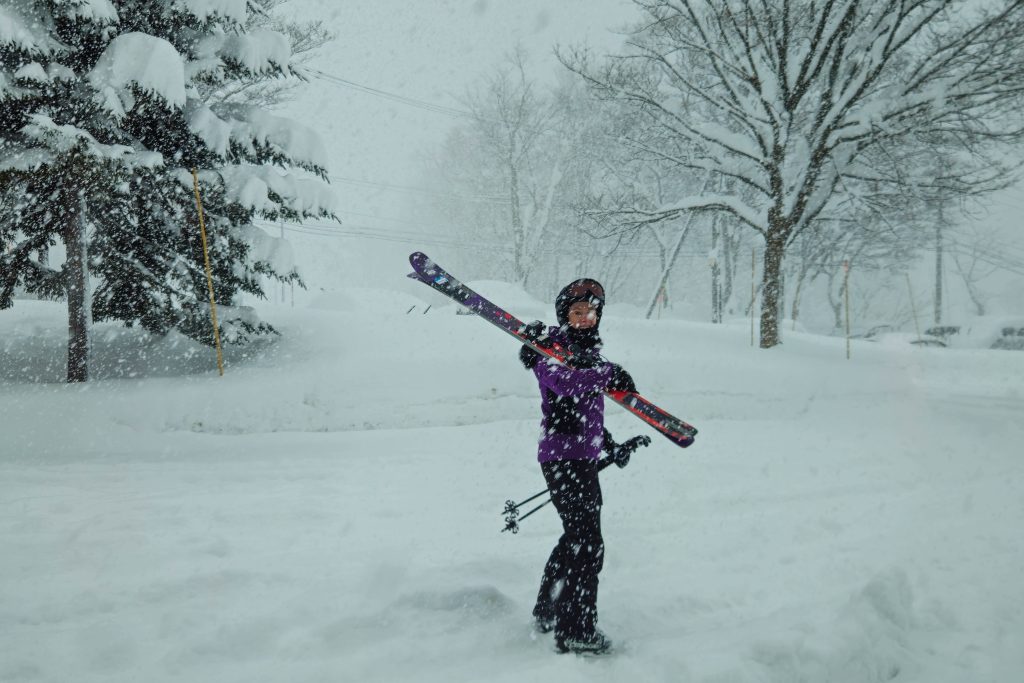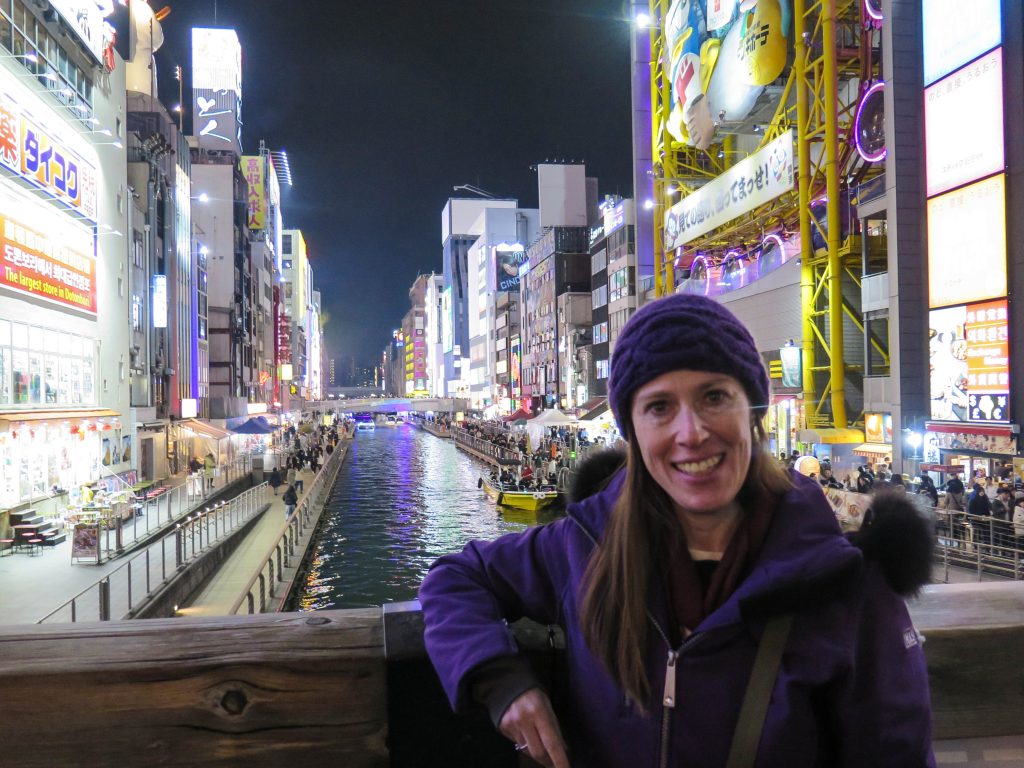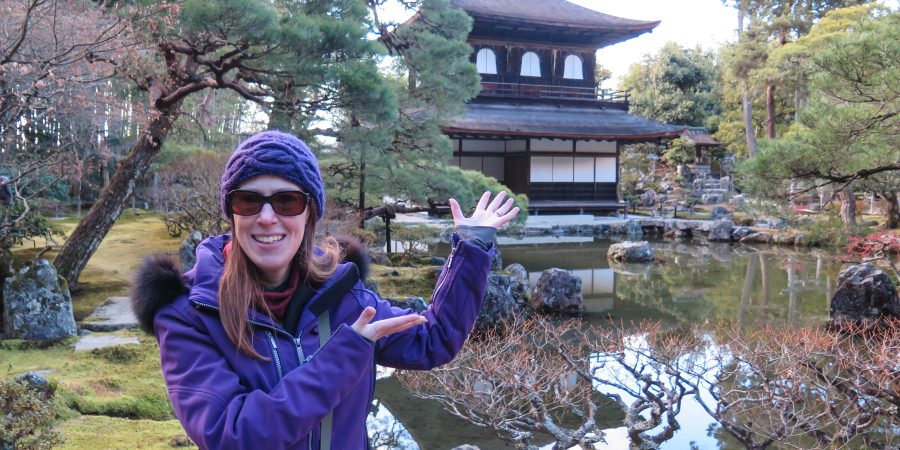
Happy new year to all my readers! I’m recently back from a wonderful winter trip to Japan, where I explored winter wonderland-like weather in Hokkaido, went skiing in the fabulously famous Japanese powder at Niseko, ate tons of fish and ramen and wonderful food, and explored the bustling metropolis cities of Tokyo, Osaka, Kyoto, and Sapporo.
It wasn’t my first trip to Japan. But it was my first visit back in nearly two decades, and my first winter visit. More to the point, it was the first time I’ve been to Japan since starting this blog.
Now, this wasn’t a shopping trip by any means. Yes, plenty of people go to Japan to shop ’til they drop, but I don’t tend to travel that way. I’m a backpacker who likes to travel light, focus on cultural attractions, and bring home very little in the way of acquisitions or souvenirs. However, I didn’t entirely avoid the shopping-focused, fashion-obsessed culture in Japan, nor was I fully successful at avoiding the temptations presented by the many malls, retailers, department stores, or dizzying displays.
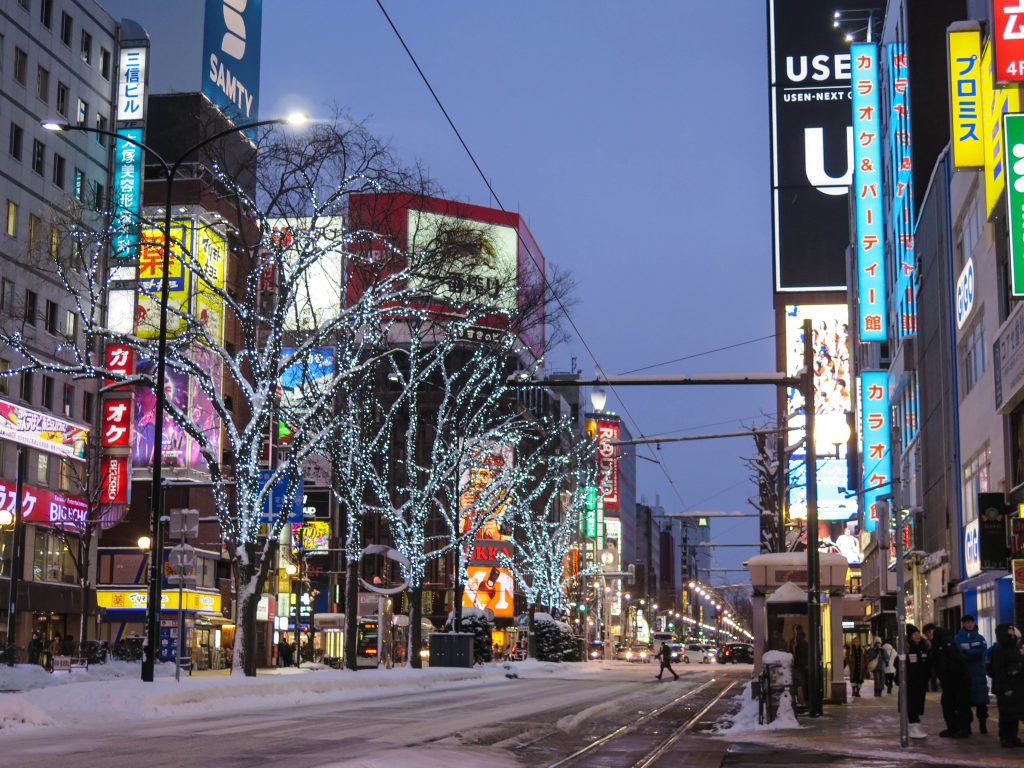
As a 5’1″ petite, I’ve spent much of my life hearing the oft-repeated advice for us shorties to shop in East Asia, or to look for Asian brands of clothing here at home. The argument goes that East Asian women from countries like Japan, South Korea, or China, tend to overall be smaller, shorter, and slimmer in build than women elsewhere on the planet, so clothing sold there is often cut smaller and shorter in order to accommodate this. As a result, the logic says, it’s much easier to shop in Asia if you’re short.
But is it?
I already knew from previous trips to East and Southeast Asia that this advice, while somewhat true, is a bit incomplete. Yes, there are smaller clothes available in many places in Asia. But the full story is a bit more complicated than that. And countries like Japan or South Korea aren’t necessarily the shopping havens that they appear to be for us shorties.
So on this post, I want to explore this idea a bit, using my own experience in Japan on this most recent trip to illustrate.
Japan: Where you can literally shop ’til you drop
First, let’s get this out of the way: Yes, Japan can be an amazing country to shop in, especially if you’re fashion-obsessed.
There is just a massive quantity of stuff available, especially clothing, but also, everything else imaginable. Discount stores like Don Quixote (known locally as simply “Donki”) have a head-spinning, dizzying product selection of everything you could imagine, usually at reasonable prices. Whatever you’re into, whether it be high fashion, nerd culture and video games, cute “kawai” characters, electronics, or pretty much anything else, you will find in abundance in Japan.
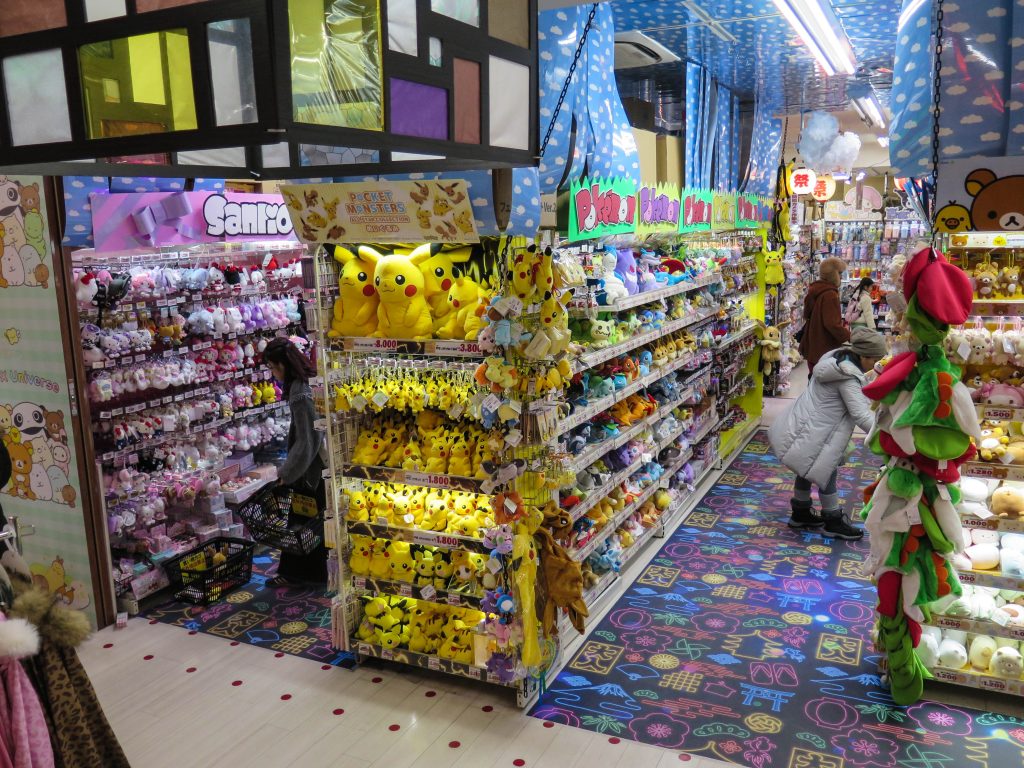
And in the major Japanese cities, where I regularly found myself walking upwards of 30,000 steps per day, I don’t think it’s an exaggeration to say this is a place where you can quite literally shop ’til you drop. And I almost did, a few times, even when I didn’t specifically set out to go shopping, and even when I didn’t end up buying much. Just the act of browsing and exploring the many shopping neighbourhoods and districts is a tourist experience in itself.
Sizing for petites, or, does it really fit better?
Ah, the crux of why you’re reading this post: How’s the fit? Is Japan really shopping heaven for us shorties?
Erm, well, yes and no. It depends.
Are the sizes different?
Well, yes. The sizing is different. Stuff in Japan does tend to be cut a bit shorter than it is here at home, even within the same brands. That’s the good news. However, it’s not that much shorter. At least, not shorter enough to qualify as petite. More like, slightly shorter regular.
And the bad news, at least if you’re short and curvy like me, Japanese sizing also is also usually cut straighter and slimmer, especially at the bust and in the hip and thigh area for women’s clothes. Depending on your body type, this may be a good thing, or a frustrating thing.
The easiest way to see this is by looking at side-by-side charts. If you google this, you’ll quickly see some generalized size conversion charts for US to Japanese sizes, like this one:
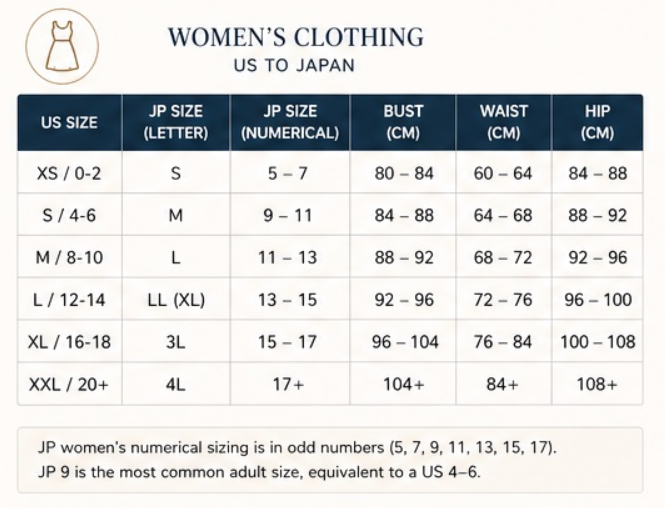
The basic principles are: For alpha sizes (S, M, L), go up a size from your US/Canadian size to get your Japanese size. For numeric sizes, Japanese sizes are odd numbers, not even (similar to US juniors, as opposed to women’s), and the numbering works differently. So my US size 4 would be around a Japanese size 9.
But of course, it’s never that simple. To illustrate, I’ll use the example of perhaps Japan’s most well-known export clothing retail brand, Uniqlo, comparing its North American and Japanese sizing. (I’ve converted the measurements to inches for the convenience of my readers, though all Japanese sizing tends to be in centimeters).
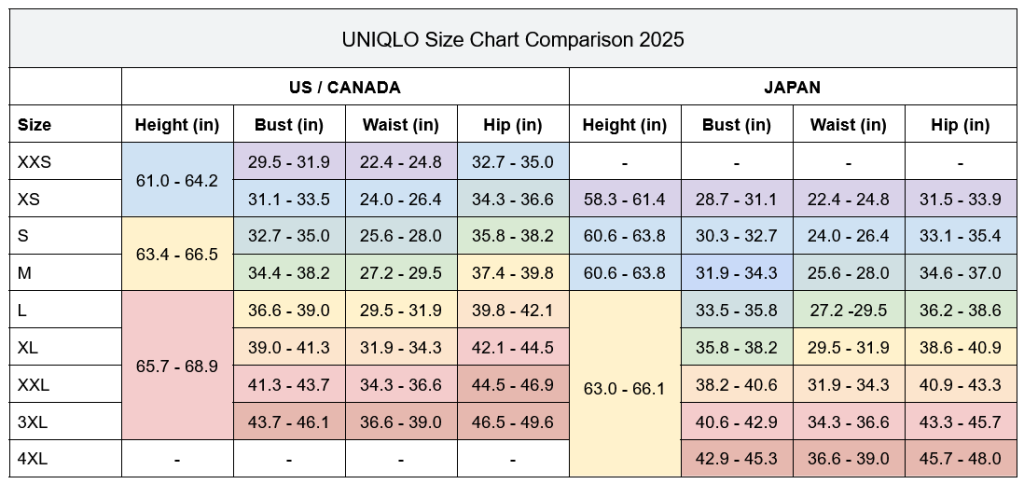
(Hat tip to Laura at New Denizen for compiling the source data, since Uniqlo makes it frustratingly difficult to see size charts on their website.)
You can quickly see a few things by looking at the side by sides:
Height and length: Yes, all the clothes are made for shorter heights in Japan than in the US. Japanese women’s sizing fits a range of roughly 4’10” to 5’6″, while the US size range is made for roughly 5’1″ to 5’9″. The equivalent sizes are made roughly 3″ shorter in Japan, as compared to North America. That will affect vertical dimensions like hem length, torso length, sleeve length, centre back length, and rise. Like I said, that’s the good news
Waist measurement and vanity sizing: North American sizes start at XXS and go to 3XL, while Japanese sizes start at XS and go to 4XL. In all cases, the waist measurement for each size is equivalent in the US to roughly 1 size bigger in Japan. For instance, I have a 27″ waist, so in US/Canadian sizes with Uniqlo, I’d fit a size S, but in Japan, that would put me in a medium. It’s notable that the waist measurements are identical between the two charts, while all other measurements are slightly off. This suggests that the North American sizing has just relabelled all their sizes to be one size smaller (a concept known as vanity sizing, to appeal to a market of people who prefer when the size on the label seems smaller). But in reality, all the sizes in Japan are basically equivalent to one size down in the US.
Therefore, I’ve altered this chart a bit to show what it looks like when we actually move those sizes next to each other to match up the waist measurements:
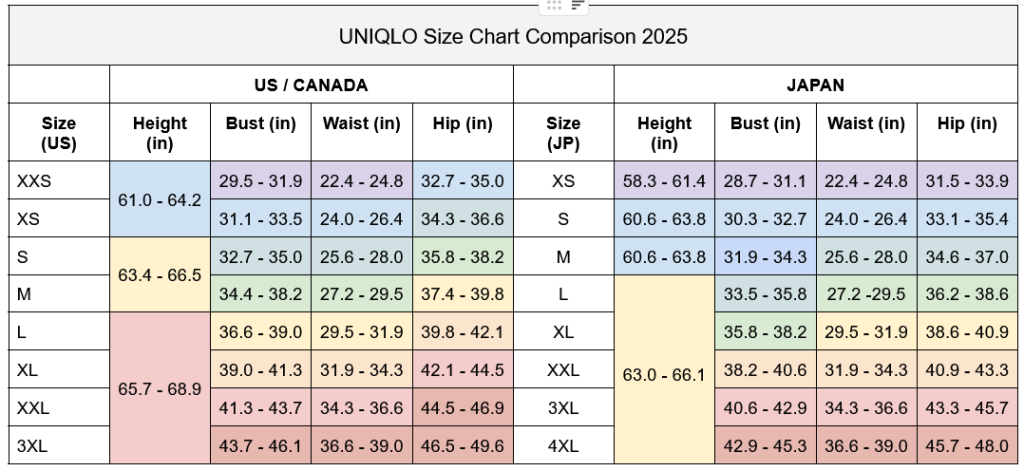
Okay, now that’s easier to see the side-by-sides. Which brings me to…
Bust and hip measurements: This is where it gets interesting: In every single size, even matching up the waist measurements, the bust and hip measurements in the US sizes are more generously cut than the Japanese sizes. In most cases, you need to go not one but two sizes up in Japan to fit the equivalent hip measurement. And while the bust measurements are more closely aligned until about size L, above that, you need to go up an extra size on the bust measurement, too.
What it means in practice: Generally speaking, I needed to go one size up in Japan on most items, compared to my usual size in Canada. And when it came to pants and skirts, I found I needed to go two sizes up to accommodate my hips and curves, which basically wiped out any advantage I got from the shorter length.
Take me, for instance. My measurements at 5’1″ are roughly 33/27/36.5. (Well, okay, that was before all the sushi and ramen and KitKats and ChocoCro I ate on this trip. They might be slightly bigger now. Gotta hit that gym now that I’m home. But anyway. My point still stands.) That puts me properly in a size S on a US/Canadian Uniqlo size chart, except for the height or length, which is designed to fit someone 3-6 inches taller than me. But in Japan, a S is too small across the board. Size M would fit better, especially in terms of height… except that it risks being snug at the hips.
And this is just according to the size charts. In practice, I found the difference to be even more dramatic. I tried on a couple of pairs of pants and found they were cut way too straight at the hip and thigh area for someone like me, who needs accommodation for curves, especially on my lower half.
However, for tops that are short enough for my short torso, and for items where the fabric is stretchier, I actually found Japanese sizing to work quite well. For instance, I bought a few HeatTech tops for Hokkaido’s colder temperatures and to wear as ski base layers. For instance, this Cashmere-blend u-neck base layer:
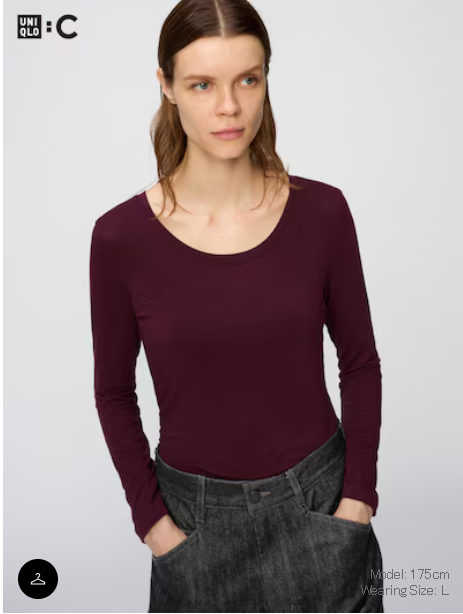 Top: Uniqlo HeatTech Ultra-warm heat tech cashmere blend U-neck T, size JP S, ¥2,490 (roughly $22 CAD)
In Japan, the size S fit me perfectly. The size chart recommends it for bust size of 30.25″-32.75″, but my 33″ bust fit fine in it, especially given how stretchy the fabric is. The size chart shows that the centre back length is 21.25″ and the sleeve length is 28″. Whereas the exact same top on the Canadian website, even if I were to size down to the XS, has a recommended bust size of 31″-33.5″, the same 21.25″ centre back length, but a sleeve length of 29.25″. So the torso length is the same between a Japanese S and a US XS, and so is the body width and shoulder width. But the sleeve length and bust area are both bigger. (And, for good measure, the Japanese one was about half the price of the Canadian one once I factored in the taxes, too!)
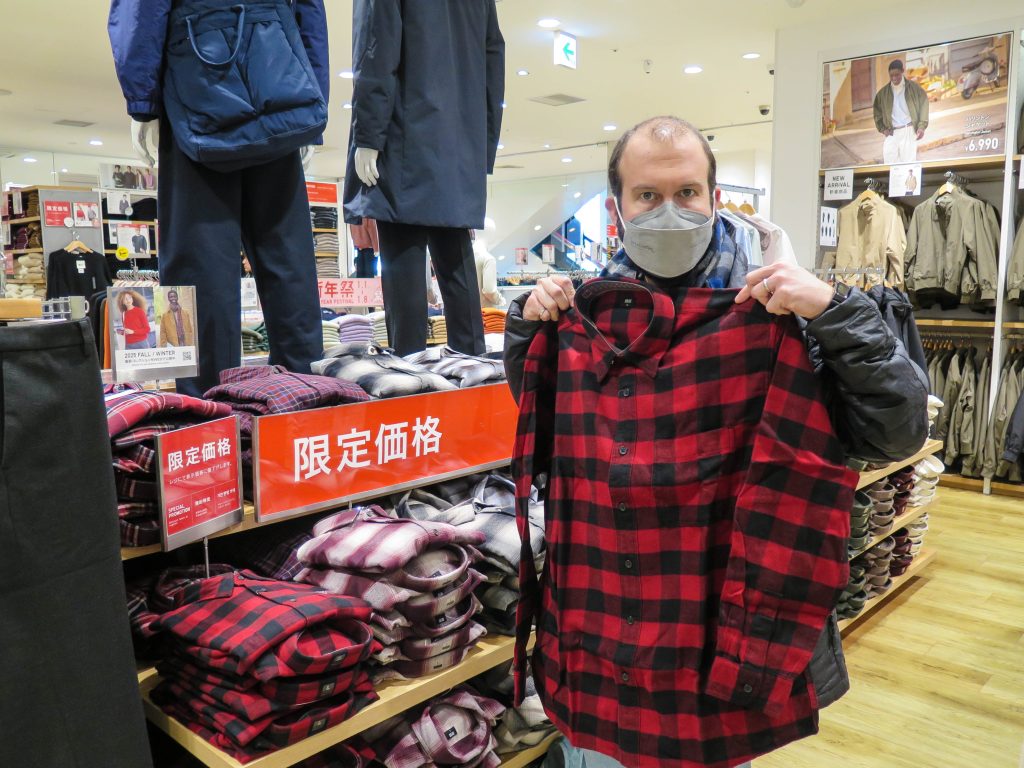
I noticed that this is also true for men’s clothing in Japan. For instance, my husband bought himself a couple of flannel shirts at Uniqlo in Tokyo, since they were cheaper than the same shirts would’ve been at home. But I notice when he wears them that they’re actually a bit snug on him. See, my husband has the opposite problem as me: He’s got a very long torso and short legs for his height, so tops are often too short on him. He also had to size up to the next men’s size in Japan to get roughly the equivalent of his size at home. (He was rather amused to see that flannel plaid is trendy again in Japan, thus validating his theory that if he’s out of fashion for long enough, eventually he’ll be in fashion again. But I digress.)
But is Japanese sizing the same as petite? Not really, or at least, not in the way we use the word “petite” in women’s clothing sizes. Asian sizing tends to be smaller all over, while petite sizing tends to be proportionally shorter but not necessarily smaller. (See this post about aspect ratio for a refresher.)
The key takeaway some petites, particularly those who have straighter, narrower body types with fewer curves, might actually prefer Japanese sizing, my takeaway is that for curvier petites like yours truly, western “petite” sizes are actually preferable, since they tend to accommodate more curve within the same height and length measurement.
Price and value: Is it worth it?
Speaking of price, that’s another consideration. Everyone says, oh, you have to go shopping in Japan, it’s so cheap! But is it?
Yes, the favourable exchange rate of late has made things significantly cheaper for many western tourists in Japan than the same items would be at home. This works out much better for people who hail from countries with even stronger currencies, like the US, Europe, or the UK. But even for us Canadians, it’s not half bad; the Japanese Yen was trading a roughly 107:1 against the Canadian dollar during our trip. Most day-to-day items, like food, personal care items, and clothing, worked out to be quite a bit cheaper in Japan than here at home, with a few exceptions like craft beer and craft chocolate, which aren’t really popular in the local market so they cost a premium.
So yes, clothes shopping is pretty decently cheap. Nothing compared to, say, getting custom clothes made in Vietnam, which is extremely inexpensive for what you get. But I did some rough price comparisons of the same items at Uniqlo, searching online for the price at home in CAD, including taxes, compared to the price in JPY, and most items were easily 20-30% cheaper in Japan, if not more.
What’s more, being able to shop tax-free at many retailers has made the prospect of being a shopping tourist very attractive, especially if you stay under your personal exemption limits back home. Tax-free shopping in Japan, when I was there this month meant lining up at a separate cash, presenting my passport at check-out, and saving the 10% VAT on most items right there on the spot. (n.b. these Japanese government has since announced that they will be changing this system later this year to make it less convenient, requiring you to claim the tax refund at the airport rather than in shops. Just FYI.)
Having said that, the high-end luxury items sold in neighbourhoods like Ginza, in Tokyo, are still expensive. You’re not going to find high fashion brands at rock bottom prices here; the stores cater to the well-heeled. It might be a little less expensive than the same things would be at home, but most of this stuff is still in the realm of “if you have to ask, you can’t afford it”.
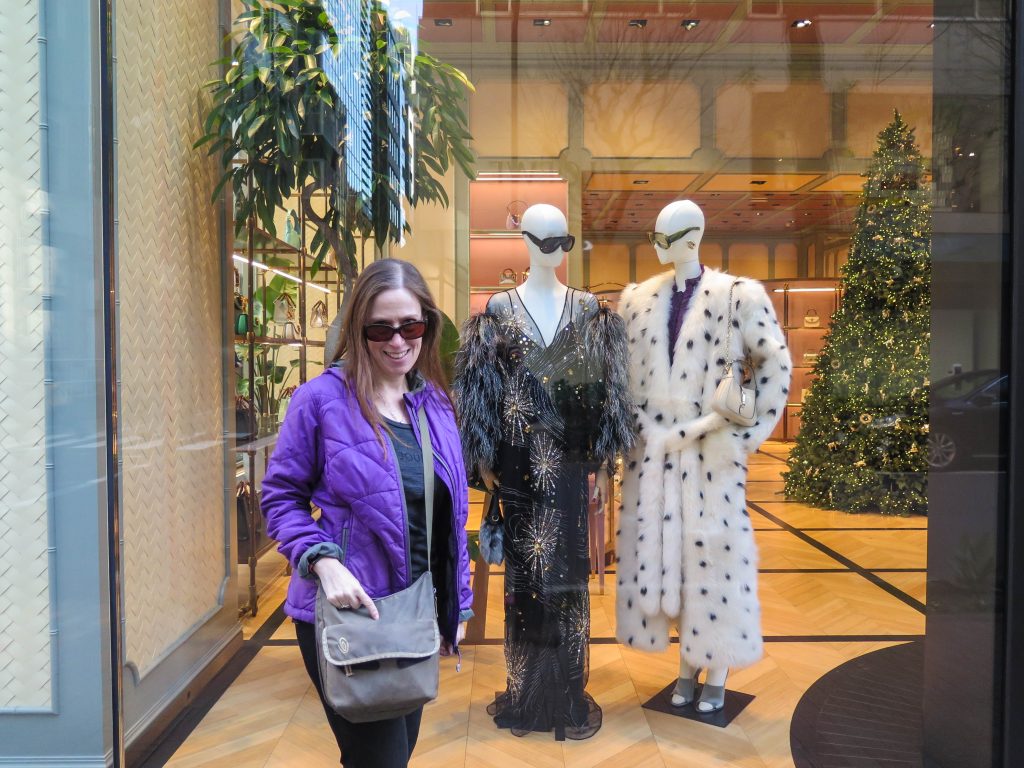
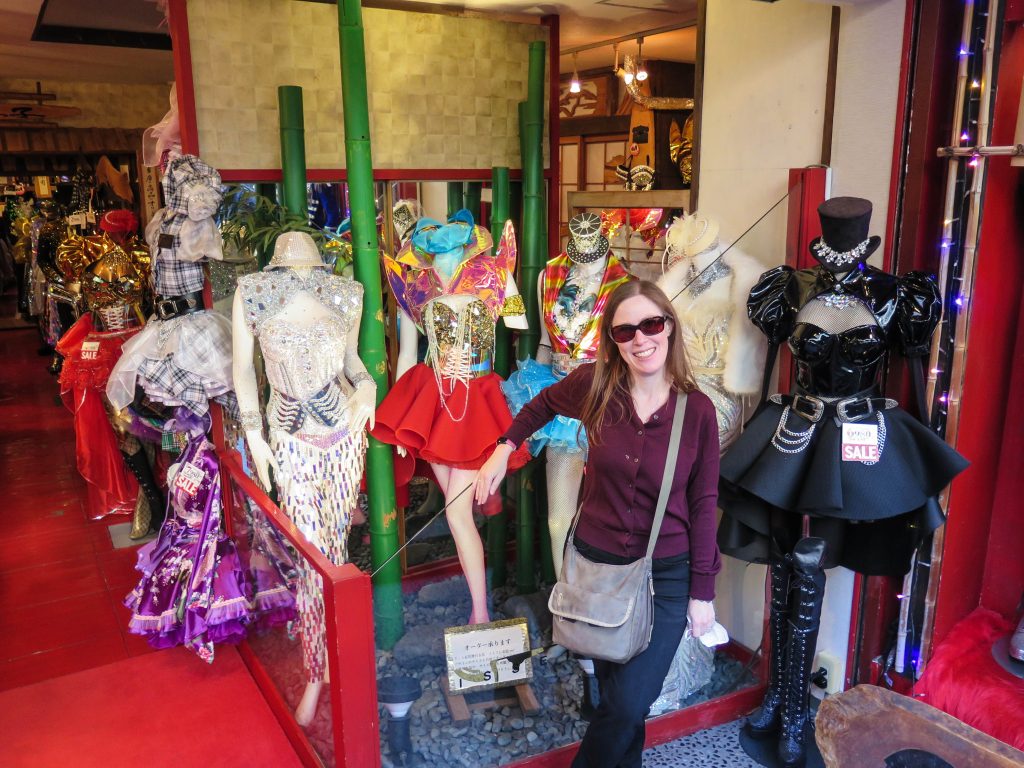
What’s more, don’t even try to enter these fancy boutiques if you’re a casually dressed backpacker like me. Jeans and sneakers will not get you far in the nice neighbourhoods or high-end restaurants or boutiques, though they’re fine for most everywhere else. The impeccably-dressed saleswomen will stare you down until you feel like Julia Roberts in Pretty Woman, visiting shops in Beverly Hills in her streetwalker getup. I took this photo outside a closed store in Ginza, but nope, I didn’t even dare to venture inside.
And on the other end of the spectrum, discount stores sell a TON of things that you really don’t need. While it might feel tempting to go on a shopping spree of buying every pair of chopsticks, ceramic plate, capsule toy, or Pokemon souvenir imaginable, most if it is, well, sorry to say, mass-produced crap that you really, really don’t need.
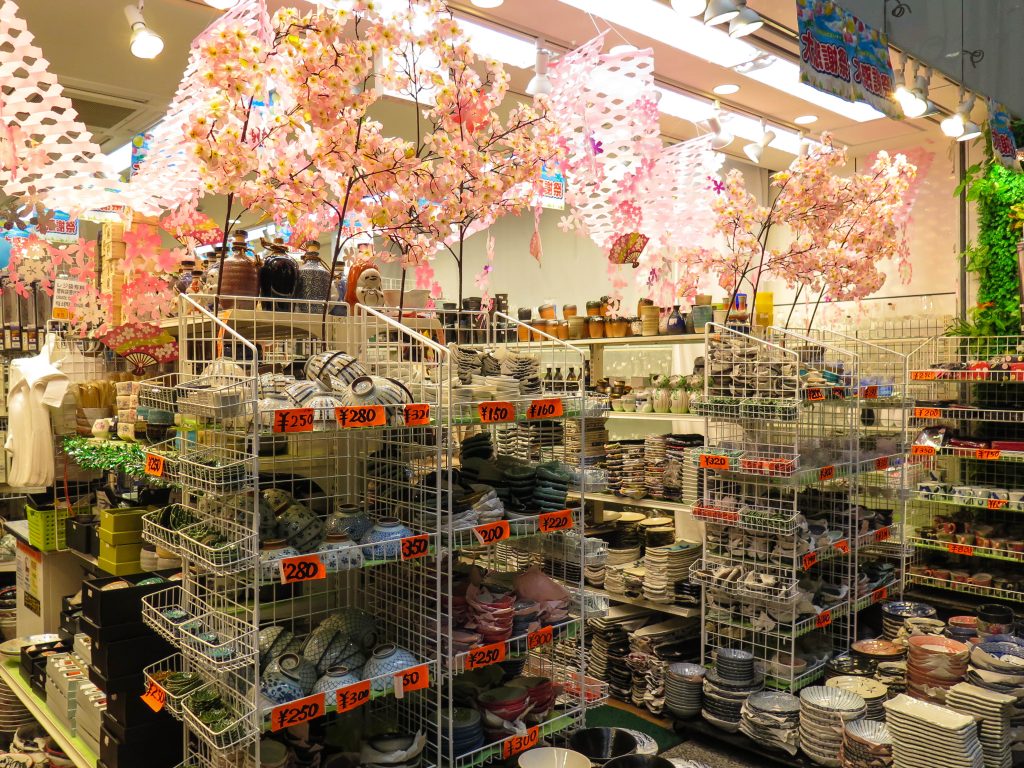
Even when it comes to clothing or accessories, yes, shopping in Japanese cities can fool you into believing you need a huge wardrobe full of the latest fast fashion trendy clothing. The thing is, you really, really, really don’t need 99% of it. Even if you’re tempted to buy every cute item you come across, I promise, most of it is just overpriced junk.
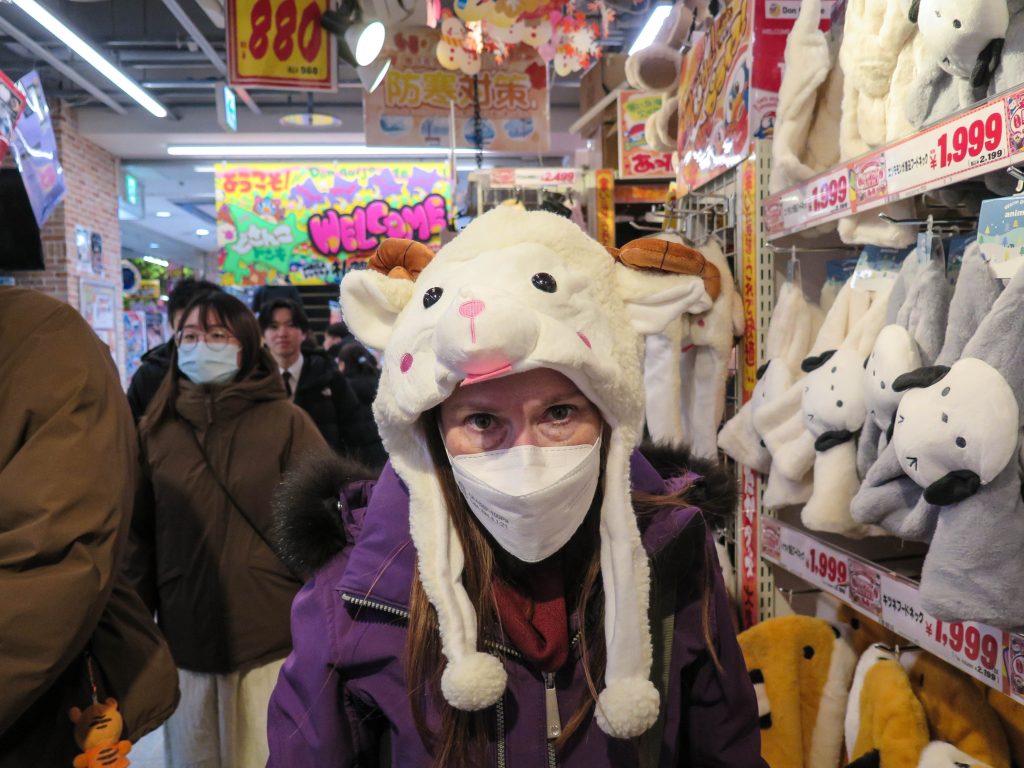
It is practical to have everything so accessible when you do find yourself needing something, mind you. My husband forgot his tuque on the shinkanen from Tokyo to Kyoto, and was rather annoyed by it, given the cold winter wind. But a Uniqlo was only a short walk away, and a few minutes later, he had a brand-new HeatTech hat on his head and was feeling much better. Sometimes, convenience is great.
But honestly, how many Pokemon scarves does one person need?
Dressing on trend, or, what happens when everyone dresses alike?
That’s the thing about Japanese fashion: It seems like the items there are so unique, so different, so out there. But that starkly contrasts with the collectivist bent in society that basically ensures that everyone dresses in a very conformist way. It seems to me when I visit Japan that the social pressure for everyone to dress more or less alike is intense, much more so than here at home.
As a result, those scenes of Japanese streets full of salarymen in black suits are not just lore; they’re reality. In fact, muted neutral colours like black, dark grey, navy, and cream or off-white seemed to be the only colours I saw local people wearing. I really stood out in my purple jacket in a sea of black, white and grey everywhere, just for daring to wear a colour.
It’s to the point where even the trends seem conformist, just because everyone seems to be wearing them at the same time. I noticed this on this trip, with so many women wearing a variation of a theme:
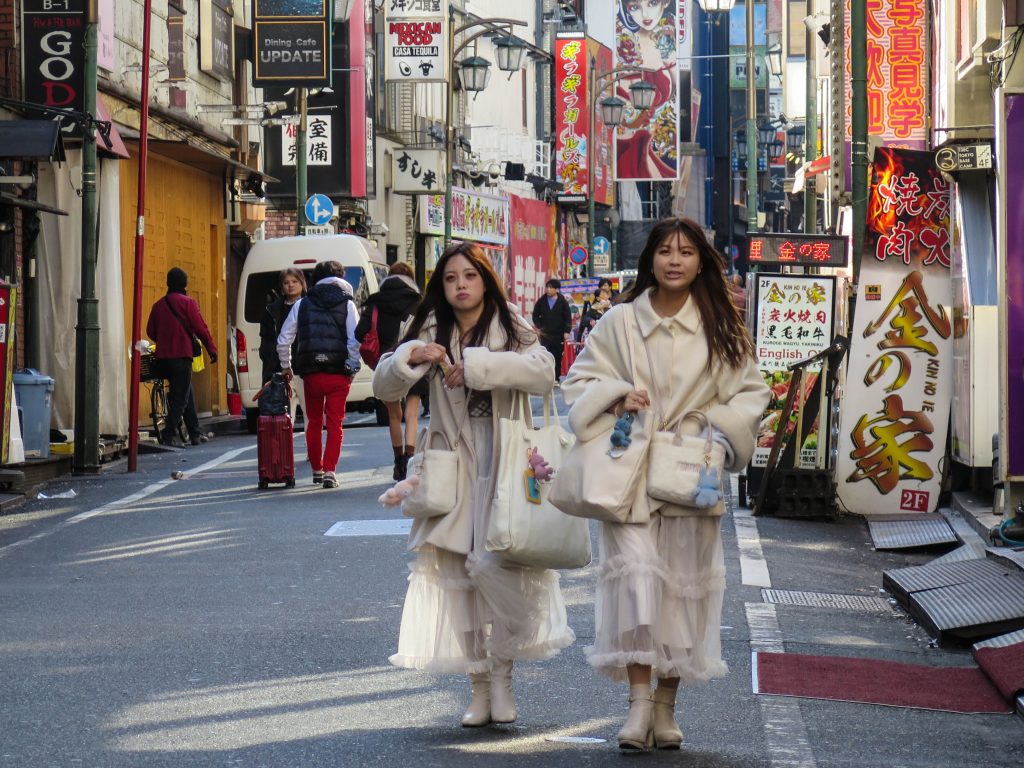
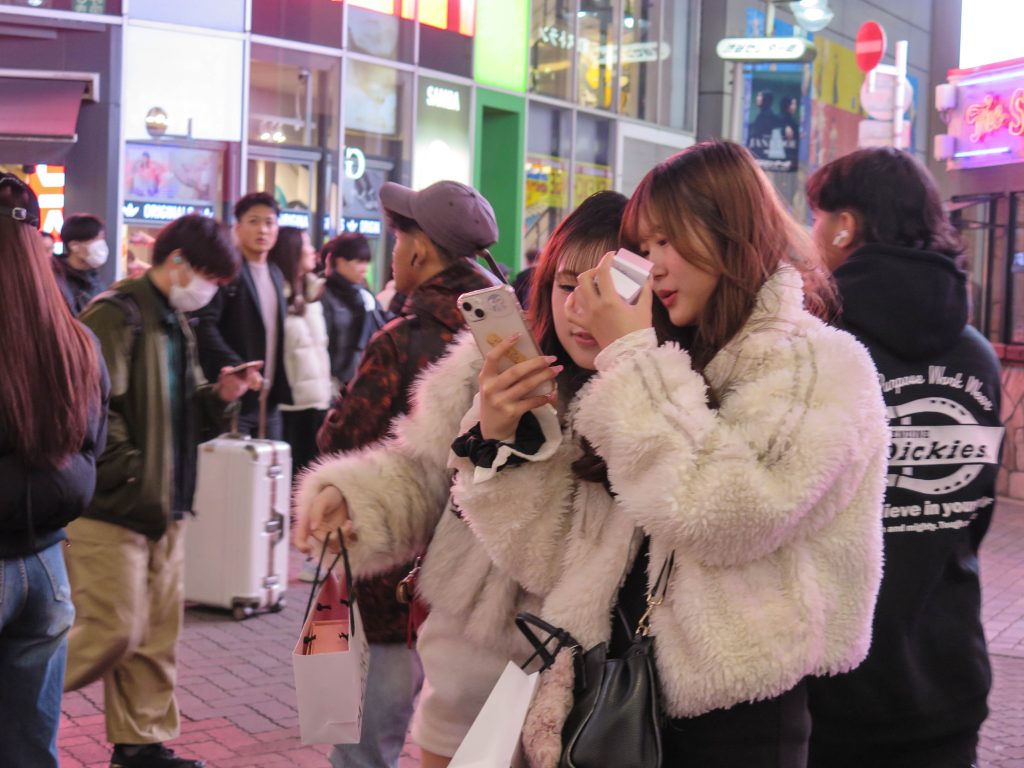
It’s an interesting approach to creativity, that kinda feels uncomfortable to me. It’s more like a Pluribus-style groupthink than a case of unique individual expression. Even the really out-there fashion in areas like Harajuku all felt out-there in the same way.
(I remember feeling the same way when I was in South Korea in spring of 2018. It felt like all the women in the country had decided that beige khaki oversized trench coats were the fashion item of the season.)
It’s so pervasive that even I succumbed at one point and decided, hey, maybe I really do need a fuzzy white zip-up sweater. I picked this up at Uniqlo near the end of my trip, after seeing what felt like literally everyone wearing them around Japan. Cute, right?
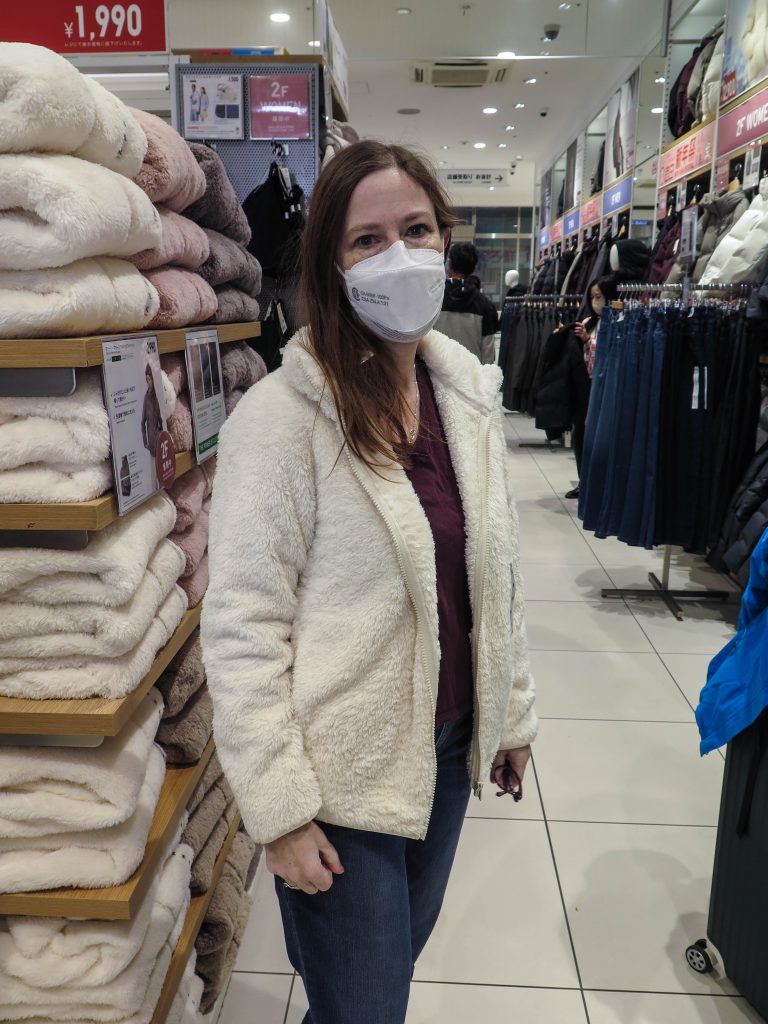
But so far since getting home, I’ve worn this… well, mostly in the house with my PJs when I’m trying to stay warm. It’s far too cold in Montreal in winter to wear this as an outer layer, and the sweater is too thick to fit comfortably under my winter coat. Maybe I can get some use out of it in spring or fall, but even then, I think I might feel a bit silly wearing this — and the white is going to get dirty far too fast.
Ironically, I usually don’t fall victim to short-term fashion trends here at home, preferring to stick to my own style and wear more classic pieces. But something about spending a few weeks in Japan made me lose my mind a bit and become a temporary fashion victim. Oh well, at least it cost less than $20 bucks.
Other sizing considerations
There’s more to shopping in Japan than just comparing sizes at a big-box store like Uniqlo. Whether you find Japan to be particularly petite-friendly might depend a lot on your particular style aesthetic, your body type, your preferences, and on how you like to wear certain pieces. A few things to consider:
One-size-fits-all… or does it?
A lot of shops in Japan don’t even use sizing. Instead, they use something called “free size” to indicate a one-size-fits-all item that is supposed to fit, well, everyone. That is, if your body conforms to the traditional Japanese standard sizing.
Free size clothing is particularly common in trendier shops, or those catering to specific aesthetics or sub-styles. The sizing here is inconsistent. But in my experience, anything free-sized was too small on me if it needed to fit over my bottom half, such as pants, skirts, or dresses. Tops were more hit-or-miss, with some being ridiculously boxy and oversized and basically drowning me, while others fit well in the length but pulled too much across the chest. And of course, so much Japanese clothing is cutesy and teeny-tiny and cut to fit impossibly small bodies, that I often found myself unable to fit (as a US size 4 petite) in most one-size clothes in Japan at all. And even if I could get them on, they usually weren’t particularly flattering.
All I can say to generalize one-size-fits-all clothing is that we petites might have an easier time than taller people. But maybe not. If you’re curvy, bigger in any dimension, or petite plus, you will still find Japanese shopping to be a real struggle.
Tricky items: Bras and shoes
Two things you will probably want to bring from home, no matter how much you plan to shop in Japan, are bras and shoes. This is even true if you’re petite.
Bras, well, if you’re bigger than about a B cup, all I’m gonna say is, good luck with that. Most of the stores I saw sold bralettes and cutesy little things that weren’t really meant to offer much support. I don’t have time to write a detailed post on bra shopping in Japan, but luckily, here’s a good explainer.
And shoes? Surely those should be easier for petites in Japan, right? Well, not so much. One good thing is that Japan uses the actual foot length instead of arbitrary sizing, so instead of a women’s 6 or 6.5, I’m generally around a 22.5 or 23.0. This is something I’m nicely familiar with thanks to ski boots, which use mondo sizes that operate in the same way. Very refreshing.
However, I personally found that, despite having a lot of selection in smaller sizes, Japan has almost less availability of narrow shoe sizes than we do in Canada (as if that’s even possible!) Japanese shoes tend to come in regular or wide sizes, same as here at home. I’ve been told that Japanese women, on average, actually have wider feet than North American women, which seems counterintuitive, but there you have it. Bodies are incredibly diverse, and of course this doesn’t apply to everyone. But for me, with my ridiculously narrow skinny feet, I really found it impossible to shoe shop in Japan. Unless I wanted platform Mary Janes or platform UGGs, that is.
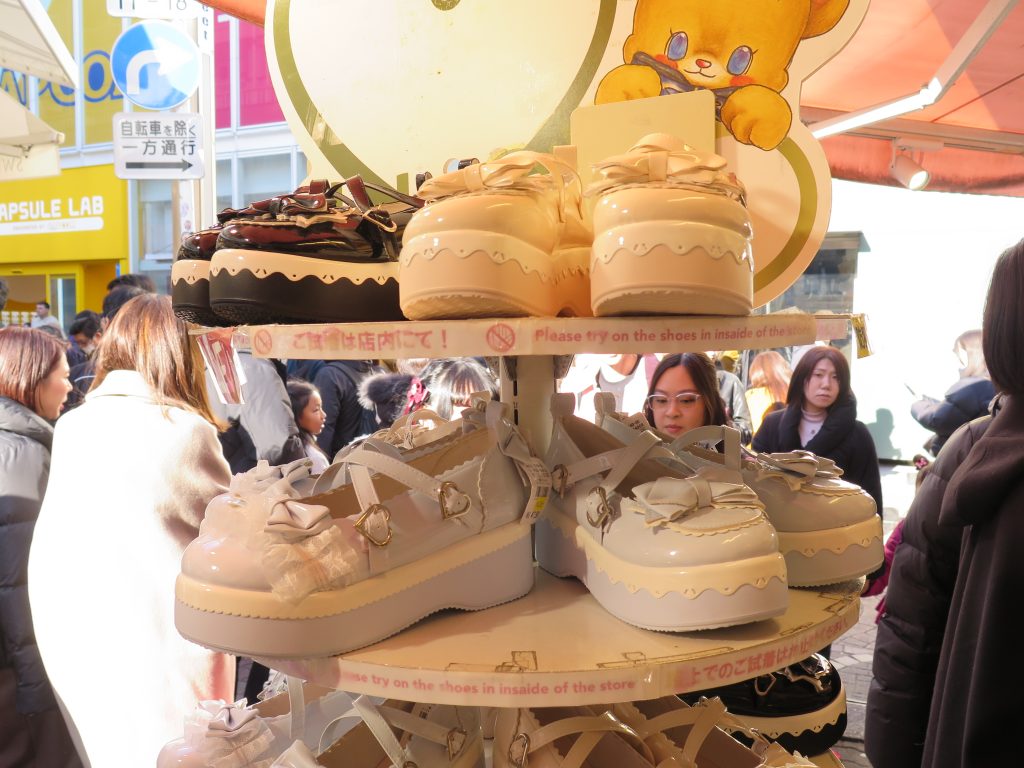
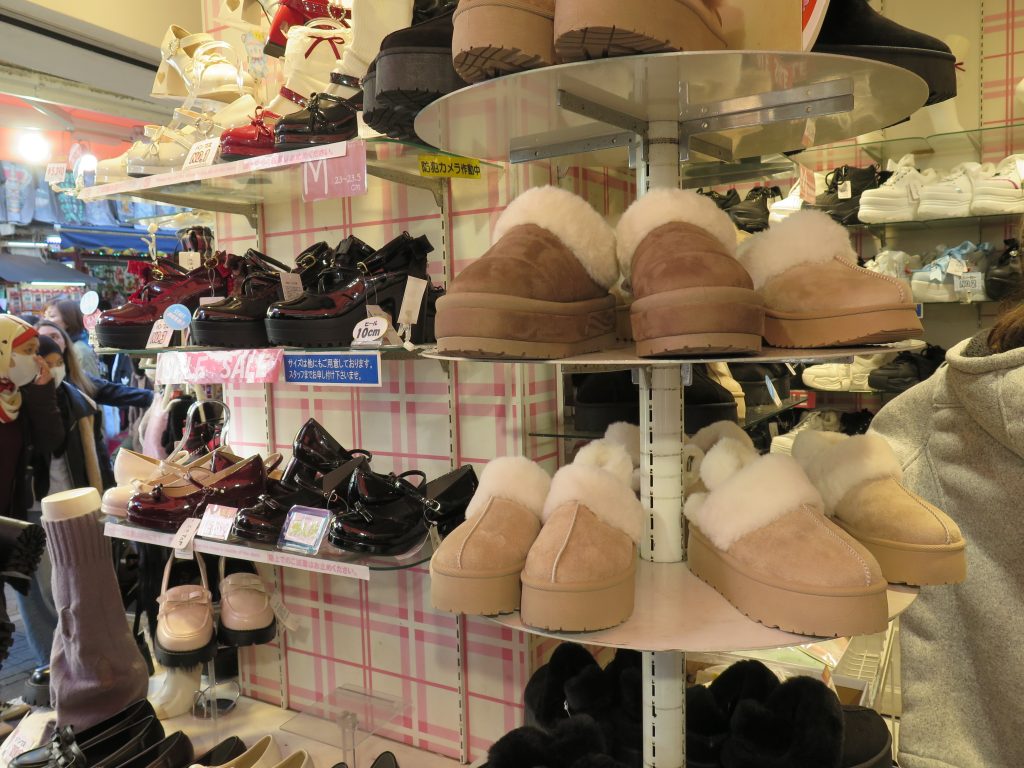
One thing is for sure: You will walk a TON on your visit to Japan. And the last thing you want to subject your feet to is a pair of ill-fitting shoes. Better to buy them before you go and break them in at home.
Surprisingly easy: Eyeglasses
On one of our last days of the trip, my husband’s glasses broke, with one of the tiny screws from the frame falling out and one of the lenses popping out in the subway in Sapporo. Luckily, he managed to catch the frame and lens before any damage, and we popped into a nearby optician who kindly fixed the glasses for him — free of charge, even! How awesome. (Hey, let’s give that shop a shout-out. Why not?)
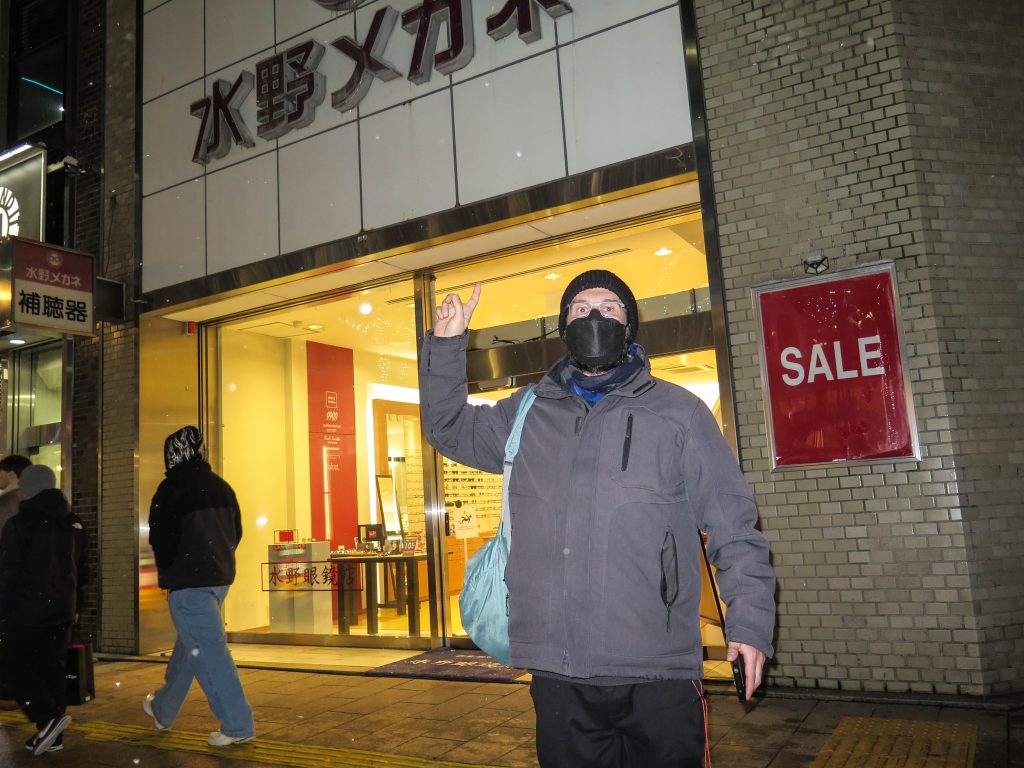
What does this have to do with being petite in Japan? Well, nothing directly. But while he was getting his glasses fixed, I had a chance to browse around the shop and try on some glasses frames. And let me tell you, it made me wish I lived in Japan. SO MANY CHOICES of petite-friendly narrow frames for small faces!
It was the opposite of at home, where if I’m lucky I maybe – maybe – get a couple of choices to try. Buying glasses for me is always a struggle. But in Japan, it seems it would be so very easy. It almost made me sad that I wasn’t in the market for a new pair anytime soon. I could’ve easily had fun buying new frames there. (Though, no, it wasn’t worth it to get extra pairs, not with what my progressive lenses cost.)
Shopping in Japan: Some practical tips
My biggest pieces of practical if you’re setting out on a shopping day in Japan are:
- Don’t assume that, just because you’re petite, you will find stuff that fits. This is my #1 takeaway. If you’re short, you might have an easier time finding things that fit vertically. But that doesn’t mean that all the clothes will fit your shape or body type. This is especially true if you’re curvier or a bigger size than the Japanese average, which tends to cater to slimmer, straighter builds.
- Bring a backpack. Most stores don’t give out shopping bags anymore. And bags that you carry in your hands, or even on one shoulder, will get heavy as the day goes on. A lightweight backpack, even a collapsible one, is a great way to carry around your purchases when you’re on your feet for 8-10 hours at a time.
- Wear comfortable shoes. See above.
- Carry hand soap and a mini towel. Most public washrooms in Japan don’t provide these; you’re expected to bring your own. You can easily pick these up at the nearest discount store or kombini if you don’t have them.
- Pick one district at a time. For instance in Tokyo, different neighbourhoods in the major cities are known for different approaches to fashion. The luxury boutiques of Ginza, the edgy, trendy youth culture fashion in areas like Shibuya and Harajuku, or the thrift shops in Koenji, all cater to different styles and crowds.
- Donki doesn’t always have the best prices. It’s a tourist attraction, and it’s fun to visit the mega-Donki locations at least once. But many of the items available there are also sold elsewhere for a much lower price. Shop around.
- There’s more to Japan than Uniqlo. Some of the most fun shopping can be found at independent boutiques, thrift stores, local markets, and in smaller neighbourhoods outside of the main shopping streets and arcades.
- Go up a size, and try before you buy. As I noted above, the size charts are different in Japan than they are at home, even for brands that sell in multiple markets. Try stuff on before you buy it, and don’t assume that the size on the label will match the same dimensions as that size at home.
- Resist the temptation to jump on local trends. Just because it seems like everyone in Japan is wearing something while you’re there doesn’t mean you will have any use for it once you get home. It might feel fun to dress in a super-kawaii cutesy outfit in Tokyo, sure. But ask yourself, how comfortable would you be wearing that out to brunch back in Canada? Outside of Otakuthon, that is?
- Leave space in your bag for purchases. Japanese department stores have entire floors where they sell cheap luggage to tourists who didn’t bring enough bag space, and who rush to buy an extra suitcase to pack full of purchased items before heading home. If you don’t want to be one of them (and pay the sometimes-hefty additional baggage fees), then pack light and leave some space for stuff you buy along the way.
- Use the luggage shipping services. Yamato “Black Cat” is everywhere, and will send your stuff from almost anywhere to almost anywhere in Japan for a low fee. If you buy a bunch of stuff, it’s way better to ship it onward than to lug it with you on spaces like trains, buses, or planes, where oversized luggage is prohibited or, at least, heavily frowned upon. I travelled light, with just a carry-on backpack for most of my trip. I had a second bag full of ski gear for skiing, which, upon landing in Tokyo, I shipped onward to Hokkaido to my Niseko hotel. Likewise, my husband bought a fancy kitchen knife in Tokyo, which he obviously wouldn’t have been able to take on the internal flight with him, so he shipped it ahead to Hokkaido, where we retrieved it and placed it in our checked luggage for the trip home.
- Don’t spend the whole trip shopping! Japan has so much more to see and do than just shopping. Sure, it’s fun for a couple of hours here and there to check out the stores. But seriously, get out there, do things, experience things, visit temples and shrines, see the countryside, go hiking or skiing, get out into nature, visit an onsen, eat and drink all the things, and fall in love with the country… all without buying a thing.